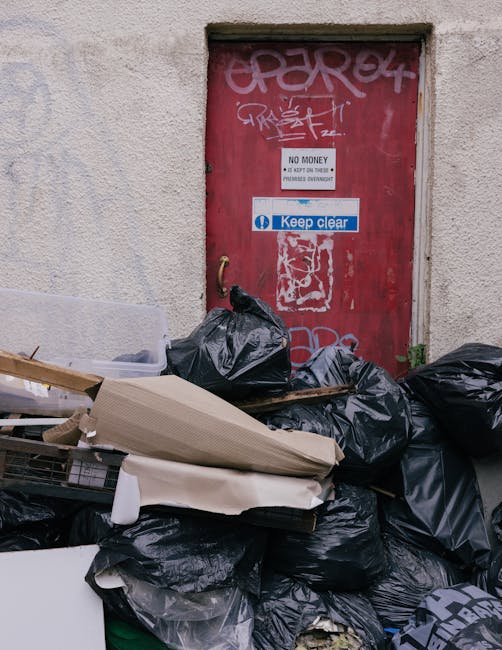
Bulky waste clearance near Kentish Town West station: a practical local guide
If you are trying to shift a sofa, an old wardrobe, broken appliances, or a pile of awkward bits and pieces, bulky waste clearance near Kentish Town West station can feel like one of those jobs that should be simple, but somehow isn't. There is the lifting, the sorting, the access issues, the timing, and the nagging question of where everything is actually meant to go. To be fair, that is exactly why many people prefer a professional clearance rather than spending a weekend wrestling a mattress down narrow stairs.
This guide explains what bulky waste clearance involves, how the process usually works around Kentish Town West station, what to check before you book, and the best way to avoid delays or unnecessary costs. You will also find a straightforward checklist, a comparison of common disposal options, and a few practical tips that make the whole thing much less painful. No fluff. Just the useful stuff.
Why bulky waste clearance near Kentish Town West station matters
Bulky items take up space in a way that smaller rubbish never quite manages. A single sofa in a hallway changes how a home feels. A broken freezer in a flat can block storage, stop cleaning, and turn into one more thing you keep stepping around with a slightly irritated sigh. Near Kentish Town West station, that matters even more because many homes and businesses in the area have tight entrances, shared access, limited loading space, or stair-heavy layouts.
There is also the local traffic reality. Around station areas, timing matters. A clearance crew that arrives unprepared can cause hassle for neighbours, other residents, and sometimes the people doing the lifting too. A good bulky waste clearance service works with the setting, not against it. That usually means planning access, understanding what needs to be removed first, and keeping the process tidy and efficient.
People often look for bulky waste help when they are moving out, replacing furniture, clearing a spare room, or dealing with an unexpected accumulation after a renovation or life change. It can be one item. It can be a whole flat. Either way, getting it removed properly saves time and cuts down on stress, which is no small thing when your week is already full.
There is a broader reason too: bulky waste should be handled with proper sorting and disposal routes. Items that can be reused, recycled, or separated for specialist disposal should not just be thrown into a mixed pile and forgotten. Services that take responsible waste removal seriously can reduce the amount that ends up treated as general rubbish. That is good for you, and frankly better for the environment as well.
Expert summary: Bulky waste clearance works best when access, item type, and disposal method are planned in advance. The smoother the preparation, the faster and cleaner the job usually goes.
How bulky waste clearance near Kentish Town West station works
Most bulky waste clearances follow a simple pattern, even if the job itself looks messy at the start. First, you identify what needs to go. Then you decide whether it is a single-item collection, a room clearance, or a larger mixed job. After that comes the quote, the booking, the collection, and the sorting of items for recycling, reuse, or disposal. Simple on paper. Less simple when there is a wardrobe wedged behind a bed frame.
In practice, the service usually begins with some sort of assessment. That could be a few photos, a written list, or a phone conversation where you explain the size and access. If there are stairs, no lift, awkward parking, or very large items, say so early. It saves everyone from surprise. Nobody wants a team turning up to discover a four-piece suite and a flight of narrow stairs with zero room to pivot. Been there, seen that, not ideal.
Depending on the provider and the size of the load, the team may remove items from inside the property, from a basement, from a loft, or from a front or rear access point. Some collections are straightforward; others require careful dismantling. A chest of drawers might need no more than carrying. A bed base or wardrobe may need to be taken apart on site. That is normal.
If you are also dealing with other types of waste, it can help to understand how bulky items fit into the wider picture of clearance work. For example, mixed household loads often overlap with house clearance or home clearance, while old armchairs, sofas and table sets may be better handled through furniture clearance or mattress and sofa disposal. The right route depends on what you have, not just how much of it there is.
Good clearance providers also pay attention to item condition. Reusable items may be separated from broken or contaminated waste. Appliances can require special handling. And if a job includes confidential material, office equipment, or anything with personal data, you may need a different approach entirely, such as confidential shredding.
Key benefits and practical advantages
The obvious benefit is that the bulky item disappears. But there is a bit more to it than that.
- Less physical strain: You avoid carrying heavy items down stairs, around corners, or through narrow communal hallways.
- Faster turnaround: A professional clearance can often be completed far quicker than arranging multiple trips yourself.
- Better access handling: Station-area properties often come with awkward access. A good team knows how to work around it.
- Cleaner finish: Items are removed in one go, rather than being left in piles for "later".
- More suitable sorting: Reuse and recycling can be considered before disposal.
- Less disruption: Fewer trips, fewer bins, fewer moving parts. That really matters in a busy London neighbourhood.
There is also a less obvious benefit: decision fatigue. Once one or two big items start accumulating, people often spend weeks thinking about them, moving them a little, and then moving them back. You know the sort of thing. A proper clearance ends that loop. It gives the room back to you.
For landlords, letting agents, offices, and property managers, the advantages are even more practical. A quick, orderly bulky waste clearance keeps void periods under control and helps prepare a property for cleaning, decorating, or handover. If the load includes workplace items, office clearance or business waste removal may be the more appropriate route.
Who this is for and when it makes sense
Bulky waste clearance near Kentish Town West station is useful for more people than you might think. It is not just for big house moves or full refurbishments. In fact, many jobs are smaller and more ordinary than that.
You may need it if you are:
- replacing a sofa, bed, wardrobe, fridge, or washing machine
- clearing a flat after tenants move out
- emptying a storage room, loft, garage, or shed
- making space after a renovation or decorating job
- tidying up a property for sale or rental
- removing old stock, fixtures, or office furnishings
- sorting out an inherited property or long-neglected room
It also makes sense if you have items that are too awkward for standard bin collections. That is a common sticking point. Council collections can be helpful, but they often involve waiting, booking limits, or restrictions on the number and type of items accepted. If you need the job done soon, or if access is difficult, an arranged clearance may be the better option.
One practical example: a tenant moving out with a broken wardrobe, two mattresses, a chair, and a desk. That is too much for casual dumping, too awkward for a quick DIY haul, and not something you want to leave until the last day. A booked clearance is calmer, cleaner, and usually less stressful.
If you are handling a property end-to-end, you may find it useful to look at related services like flat clearance or furniture disposal depending on what needs to go and whether anything can be reused or separated.
Step-by-step guidance
If you want a smoother clearance, follow a simple process. It does not need to be complicated.
- List the items clearly. Write down everything that needs removing, including large and awkward pieces.
- Check access. Note stairs, lifts, parking limits, narrow hallways, or any locked communal doors.
- Separate special items. Keep appliances, electronics, sharps, confidential paper, or hazardous materials separate if possible.
- Take a few photos. A quick set of pictures helps explain size, quantity, and condition.
- Ask for a clear quote. Make sure you understand what is included, especially labour, loading, and disposal.
- Prepare the route. Move smaller items out of the way if you can, and protect floors if the route is tight.
- Be available on the day. A quick check-in avoids confusion, particularly if the access arrangement is unusual.
- Confirm what has gone. Before the team leaves, do a final walk-through. It takes two minutes and catches little omissions.
That last point matters more than people expect. There is often one item hidden behind a door or tucked in a corner, and no one wants the "oh, actually, could that one go too?" moment when the van is already packed. Happens all the time.
If your clearance involves items from a cellar, attic, shed, or cluttered storage area, then a broader specialist service such as garage clearance or loft clearance may be a better fit than a simple one-item removal. For outdoor overflow, garden clearance can be helpful too.
Expert tips for better results
After handling enough clearances, a few things become obvious.
First, be specific. "A few bits of furniture" is less useful than "two sofas, one wardrobe, one dismantled bed, and four bags". Specificity helps with pricing, vehicle choice, and timing. It is a small thing, but it saves hassle.
Second, tell people about access early. A lift that is out of service, a rear entrance that only opens with a key, or parking that is a five-minute walk away can all change the plan. None of that is a deal-breaker, but it matters.
Third, keep reusable and non-reusable items separate if you can. A bookcase with one broken shelf may still be useful to someone else. A damp mattress, less so. If a service can divert usable items from disposal, that is a good sign. It usually reflects a more thoughtful approach to recycling and sustainability.
Fourth, be honest about condition. Paint tins, fridges, freezers, broken glass, and anything with fluids or sharp edges need extra care. The same goes for anything you suspect might count as hazardous. If in doubt, ask rather than guessing.
Fifth, do not leave the sorting until collection day. A bit of prep means the crew can work quickly and you will notice the difference straight away. The room just opens up. Lovely feeling, actually.
If the load includes appliances, use a provider that understands safe handling for white goods. Fridge and appliance removal is not the same as moving a sofa, and it should be treated differently. Heavy, awkward, sometimes oily. Not glamorous, but very real.
Common mistakes to avoid
People usually make the same handful of mistakes when arranging bulky waste clearance. Avoid these and the process gets a lot easier.
- Underestimating volume: What looks like a small pile can fill a van quickly.
- Forgetting access issues: Narrow stairwells and parking restrictions can slow everything down.
- Mixing normal items with specialist waste: Hazardous or sensitive items should not be bundled in casually.
- Not checking what is included in the quote: Ask whether loading, disposal, and any dismantling are covered.
- Leaving the job until the last minute: That usually creates more stress than the clearance itself.
- Assuming all items are treated the same: Sofas, appliances, timber, metal, and general household waste often follow different handling routes.
Another easy mistake is trying to overdo the tidy-up before the crew arrives. You do not need to make the place showroom-perfect. In fact, people sometimes waste energy moving things twice. Just make the path sensible, keep the items together, and leave the rest to the clearance team.
And please, if there is something you are unsure about, ask. It sounds obvious, but that one question can prevent a very awkward day.
Tools, resources and recommendations
You do not need many tools for a bulky waste clearance, but a few basics help:
- Strong gloves: Useful if you need to move small items or break down packaging.
- Tape measure: Helps check whether large furniture will fit through doors and hallways.
- Basic screwdriver or Allen keys: Handy if a bed frame or wardrobe needs dismantling.
- Labels or marker pen: Good for marking what stays and what goes.
- Phone camera: Ideal for taking photos for quotes and keeping a record of what was removed.
For planning purposes, the most useful site resources are the ones that help you understand service scope, pricing, safety, and item handling. The following pages can be especially relevant if your clearance is part of a larger project:
- pricing and quotes for understanding how jobs are usually assessed
- insurance and safety for peace of mind around handling and working methods
- payment and security if you want to understand how bookings are handled
- what can go in a skip if you are comparing clearance with skip-based disposal
- about us if you want a sense of the company background and approach
A small note: if you are also clearing paperwork, files, or old office materials, do not lump them in with general bulky waste without thinking it through. Confidential shredding is there for a reason, and it saves a lot of head-scratching later.
Law, compliance, standards, or best practice
Any waste clearance work in the UK should be approached carefully and responsibly. You do not need to become an expert in waste law to book a collection, but you should expect proper sorting, safe handling, and lawful disposal routes. That is just good practice, and it is what reputable operators should be aiming for.
For bulky items, the main principles are straightforward: do not dispose of items illegally, do not put hazardous materials into general waste, and do not assume every item can be handled the same way. If a sofa, fridge, battery, or chemical product is involved, it may need a separate route. If you are unsure, ask the provider before collection rather than after. Much easier.
Safety also matters. Heavy lifting, awkward angles, and narrow access can be risky. A sensible provider will think about manual handling, team size, and route planning before starting. If you are comparing companies, it is fair to ask how they approach safety and whether they have public-facing standards such as a health and safety policy or insurance information available. That does not guarantee perfection, obviously, but it is a decent sign of professionalism.
For business customers, compliance becomes more important still. Office equipment, records, storage stock, and mixed waste streams may need careful separation. In those cases, business waste removal and office clearance are often more appropriate than a simple one-off household job.
Options, methods, or comparison table
If you are deciding how to remove bulky waste near Kentish Town West station, the most common options are professional clearance, council collection, or skip hire. Each has a place. The right one depends on volume, access, urgency, and the type of waste.
| Option | Best for | Pros | Trade-offs |
|---|---|---|---|
| Professional bulky waste clearance | One-off items, mixed loads, awkward access, fast turnaround | Convenient, labour included, suited to flats and tight spaces | Usually more tailored than the cheapest disposal-only option |
| Council bulky collection | Smaller, straightforward items when timing is flexible | Can be suitable for lighter, simpler jobs | May involve waiting, booking limits, or item restrictions |
| Skip hire | Renovations, ongoing clear-outs, lots of waste generated over time | Handy for larger DIY jobs and extended use | Needs space, permits may be needed, and heavy lifting is still on you |
| Self-haul to a disposal site | People with a vehicle, time, and manageable items | Can work well for smaller quantities | Time-consuming, physically demanding, and not ideal for oversized furniture |
In a station-area setting, professional clearance is often the most practical. Why? Because access can be awkward, time is usually tight, and you may not want to spend half a day loading a van in the drizzle while trying not to block a shared entrance. Not exactly anyone's dream Tuesday.
Case study or real-world example
Imagine a two-bedroom flat a short walk from Kentish Town West station. The occupier is moving out at the end of the month and has a damaged mattress, a large sofa, an old dining table, and several smaller items from a spare room that has slowly become a storage space. Nothing dramatic. Just the usual build-up of life.
The first step is a quick review of what needs to go. The sofa is too bulky for general bin disposal. The mattress needs a separate disposal route. The table may need dismantling to get through the hallway. A few small items can be bundled together, but the route from the flat to the vehicle has to be clear because the building has narrow communal access and limited waiting space outside.
The practical solution is a same-day or pre-booked bulky waste clearance with the items listed clearly in advance. That allows the team to arrive with the right vehicle, the right number of people, and the right plan for lifting and loading. The result is less disruption in the building, no need for multiple trips, and a much smoother handover. It is not magic. Just good planning.
That kind of scenario is very common. The issue is rarely the waste itself. It is the combination of access, size, and timing. Once those are handled properly, the rest is usually straightforward.
Practical checklist
Use this before you book or on the day of collection:
- List every bulky item that needs removing
- Separate furniture, appliances, and special waste
- Check stairs, lifts, parking, and entry access
- Take photos of the load and any awkward items
- Confirm whether dismantling is required
- Ask what is included in the quote
- Keep pathways clear where possible
- Remove personal valuables and documents first
- Make sure someone is available to answer questions on arrival
- Do a final check before the team leaves
If the job feels bigger than you expected, pause and recheck the list. Most people discover one or two extra items at this stage. That is normal. The key is catching them before the van door closes.
Get a free quote today and see how much you can save.
Conclusion
Bulky waste clearance near Kentish Town West station is about more than getting rid of a sofa or old fridge. It is about making a cluttered, awkward job feel manageable. With the right planning, the right service, and a bit of honesty about access and item type, the process becomes far less stressful than people expect.
If you are clearing a flat, preparing a property, or simply trying to reclaim some much-needed space, the best approach is usually the simplest one: list the items, check the access, ask clear questions, and choose a service that treats safety and disposal properly. The relief of seeing that extra space afterwards is a small thing, but a good one. Sometimes that matters more than you think.
And once the bulky stuff is gone, the room tends to breathe again. Funny how that works.
Frequently Asked Questions
What counts as bulky waste near Kentish Town West station?
Bulky waste usually means items that are too large or awkward for standard household bins or normal collection routines. Common examples include sofas, wardrobes, beds, mattresses, tables, appliances, and large mixed household items.
Can bulky waste be collected from flats with stairs?
Yes, in many cases it can. Access details matter, though. Staircases, narrow landings, and shared entrances can affect how the job is handled, so it helps to mention them before booking.
Is bulky waste clearance better than hiring a skip?
It depends on the job. Clearance is often better for single items, mixed furniture, or properties with difficult access. A skip can suit ongoing renovation waste, but you still have to load it yourself.
How do I prepare for a bulky waste collection?
Make a list of items, separate anything special such as appliances or confidential material, clear access routes where possible, and take photos if you need a quote. A little prep goes a long way.
Can old furniture be reused instead of thrown away?
Sometimes, yes. If the furniture is in usable condition, it may be suitable for reuse or separate handling rather than direct disposal. That is one reason clearances should be sorted properly.
What happens to a mattress or sofa during disposal?
Mattresses and sofas often need specific handling because of their size and material mix. They may be taken through a dedicated furniture or mattress disposal route rather than treated as plain general waste.
Are appliances handled differently from other bulky waste?
Usually, yes. Fridges, freezers, washing machines, and similar items may require separate treatment because of their weight, components, or contents. It is wise to mention them early.
How quickly can bulky waste be removed?
That depends on the provider, the load, and the access. Some collections can be arranged quickly, while larger or more awkward jobs may need a bit more planning. Same-day is not always necessary, but it is sometimes available.
What should I do with hazardous items?
Do not mix hazardous items into a general bulky waste pile. Paints, chemicals, batteries, and similar materials may need special handling. If you are unsure, ask before the collection day.
Do I need to be present during the clearance?
Usually, yes, or at least someone should be available to confirm what is going and answer access questions. That avoids confusion and makes the process much smoother.
How do I know if the quote is fair?
A fair quote should clearly reflect the volume, access, item type, and labour involved. If something is unclear, ask for the breakdown. A transparent quote is generally easier to trust than a vague one.
Can bulky waste clearance help with full property clear-outs?
Absolutely. If you are dealing with more than a few items, services such as house clearance, home clearance, loft clearance, or garage clearance can be more suitable than a simple one-off collection.
Is bulky waste clearance suitable for businesses too?
Yes. Offices, shops, and other premises often need removal of furniture, fixtures, or mixed waste. In those cases, business waste removal or office clearance may be the more relevant option.
Where can I learn more before booking?
You can review useful pages on pricing, safety, sustainability, and related service types such as furniture clearance, waste removal, and what can go in a skip. That gives a clearer picture of the process before you decide.